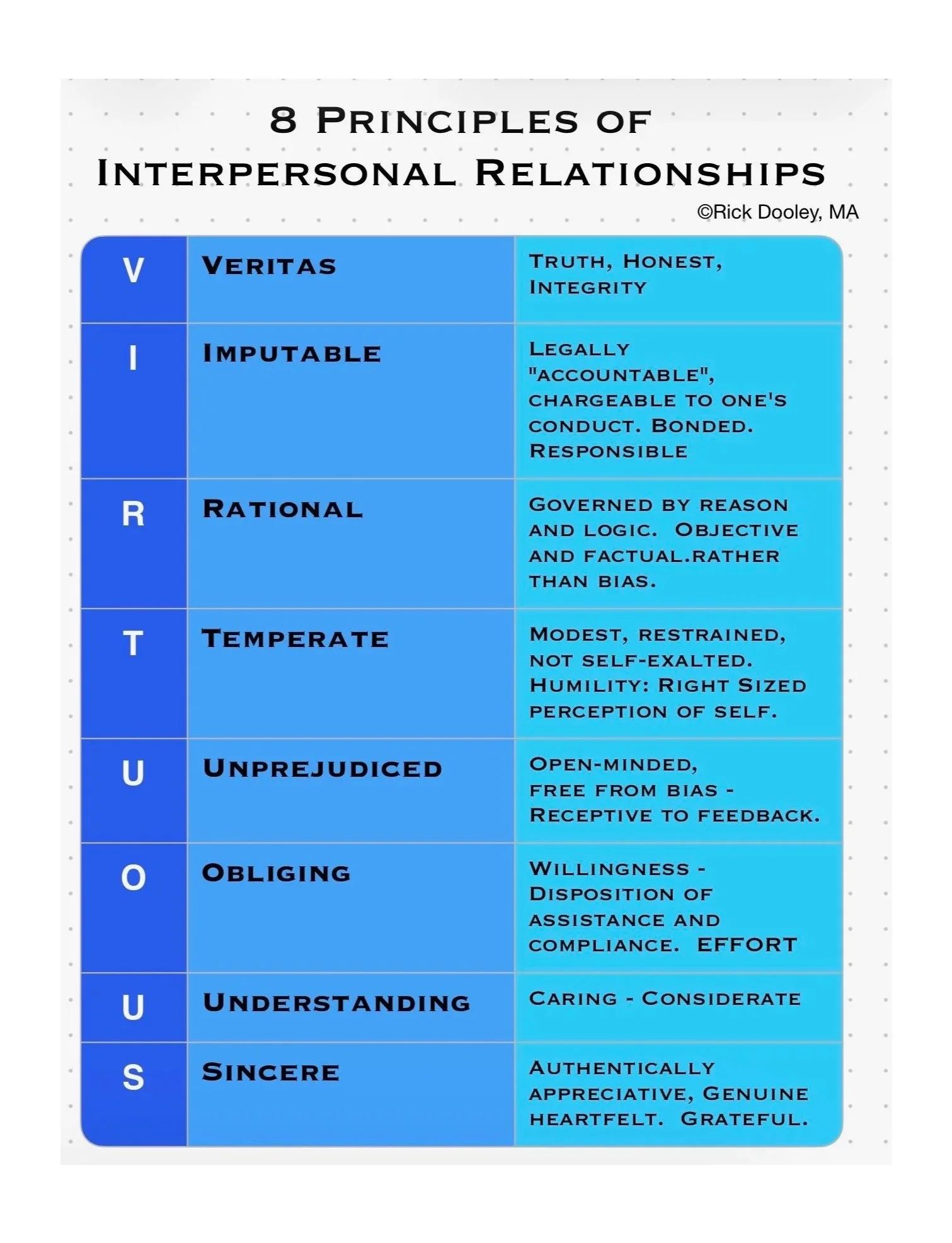
8 Principles of Healthy Relationships
Certainly! Here's a polished blog post based on your podcast conversation. I've organized it around one central idea, tightened the flow, removed the conversational repetition, and maintained your pastoral, biblical counseling voice.
Why More People Are Choosing Therapy Over the Church: Recovering the Lost Art of Understanding
One of the most sobering questions the church should ask today is this:
Why are more people choosing therapy over the church?
Certainly, there are many reasons. Some struggles require specialized medical or psychological care, and Christians should never be afraid to acknowledge that. But there is another reason that deserves our attention.
Many people simply do not feel understood.
Ironically, the body of Christ—the very community designed to "bear one another's burdens" (Galatians 6:2)—is often perceived as the last place someone can honestly share their struggles.
That should concern us.
The Missing Ingredient
Throughout Scripture, God calls His people to care deeply for one another. Yet caring does not begin with speaking. It begins with understanding.
Proverbs 20:5 says,
"The purpose in a man's heart is like deep water, but a man of understanding will draw it out."
Understanding isn't passive. It requires intentional effort.
It means asking questions before giving answers.
Listening before correcting.
Seeking to know someone's heart before assuming you already do.
Unfortunately, Christians often reverse that order.
We become experts at giving biblical answers before we've taken time to understand the biblical question.
The Church Doesn't Need Less Truth—It Needs More Understanding
Some hear this emphasis on understanding and immediately worry that we're minimizing truth.
Nothing could be further from reality.
Healthy relationships require truth.
They also require responsibility, humility, objectivity, willingness, and healthy boundaries.
Understanding doesn't replace truth—it prepares the soil so truth can take root.
People rarely reject biblical truth because it is true.
More often, they reject it because it was delivered without compassion.
People don't care how much you know until they know how much you care.
Caring Is Not Enabling
Understanding also helps us distinguish between caring and enabling.
Suppose someone is diagnosed with diabetes.
Real care isn't buying them another box of donuts because you don't want an uncomfortable conversation.
Real care lovingly encourages healthier choices—even when those choices are difficult.
In relationships, we often confuse making people happy with loving them.
They are not the same.
Love seeks what is best.
Enablement seeks what is easiest.
One pursues growth.
The other pursues comfort.
Healthy relationships always ask:
"Am I encouraging the best part of this person, or am I feeding what is unhealthy?"
The Danger of Wanting Acceptance More Than Someone's Good
One of the greatest obstacles to genuine care is our own desire to be liked.
Parents know this tension well.
There are moments when you must choose between having your child approve of you or doing what is best for them.
The same is true in friendships, marriages, churches, and ministries.
If my greatest goal is to be accepted, I will avoid difficult conversations.
If my greatest goal is to love someone, I will sometimes risk rejection in order to tell the truth graciously.
Biblical love is willing to become temporarily uncomfortable for someone's eternal good.
Why Therapy Often Feels More Attractive
Many secular counselors excel at something Christians should also excel at:
They listen.
People are heard.
Their stories are explored.
Their emotions are taken seriously.
That doesn't mean every conclusion reached in secular counseling is biblical. It isn't.
But the experience of being genuinely heard is powerful.
Many hurting people would gladly receive biblical wisdom if someone first cared enough to understand their story.
Understanding is not agreement.
Listening is not endorsement.
Empathy is not compromise.
It is simply loving your neighbor enough to understand where they are before trying to help them move forward.
Beware of Two Ditches
Churches often fall into one of two extremes.
The Gossip Ditch
Some people want to know everyone's business, not so they can help, but so they can satisfy curiosity.
This is destructive.
The Legalistic Ditch
Others shut down every difficult conversation immediately.
Someone asks for guidance.
Someone expresses concern.
Someone seeks wisdom.
Instead of helping, we respond with:
"That's gossip."
Conversation over.
Principle upheld.
Person ignored.
Healthy understanding avoids both extremes.
It asks,
"Is this person seeking to harm someone—or seeking help?"
Those are very different situations.
Healthy Care Requires Vulnerability
Many of us struggle to care because we've been hurt.
We've worn emotional armor for so long that we no longer know how to remove it.
Armor is useful on the battlefield.
It is terrible attire around the dinner table.
Healthy relationships require appropriate vulnerability.
Not reckless openness.
But enough openness that trust can grow.
If every relationship requires emotional armor, nothing healthy will ever take root.
Are You Really Caring?
Sometimes the best evaluation questions are uncomfortable ones.
Ask yourself:
Do people feel safe telling me the truth?
Am I quicker to give advice than ask questions?
Do I listen more than I speak?
Am I trying to help people—or simply manage their emotions?
Do I avoid difficult conversations because I want people to like me?
Do I genuinely want what is best for others, even if they don't appreciate it immediately?
These questions expose whether we're pursuing acceptance or practicing love.
The Church Can Recover This
This problem isn't beyond fixing.
The church doesn't need a new strategy nearly as much as it needs renewed obedience.
Imagine churches known for:
Deep listening.
Genuine compassion.
Fierce commitment to biblical truth.
Wise counsel.
Healthy boundaries.
Loving confrontation.
Patient understanding.
Those qualities don't compete with the gospel.
They display the gospel.
Jesus Himself embodied perfect truth and perfect grace.
He listened.
He asked questions.
He understood hearts.
And then He lovingly called people to repentance and faith.
That is our model.
Final Thoughts
Understanding is more than an emotion.
It is an act of love.
It chooses to enter another person's world before inviting them into God's.
When the church learns once again to understand before it speaks, to care before it corrects, and to listen before it lectures, we may find that many who are searching for help discover they didn't need to leave the church to find someone who would hear them.
Perhaps what they're looking for has been part of God's design all along.