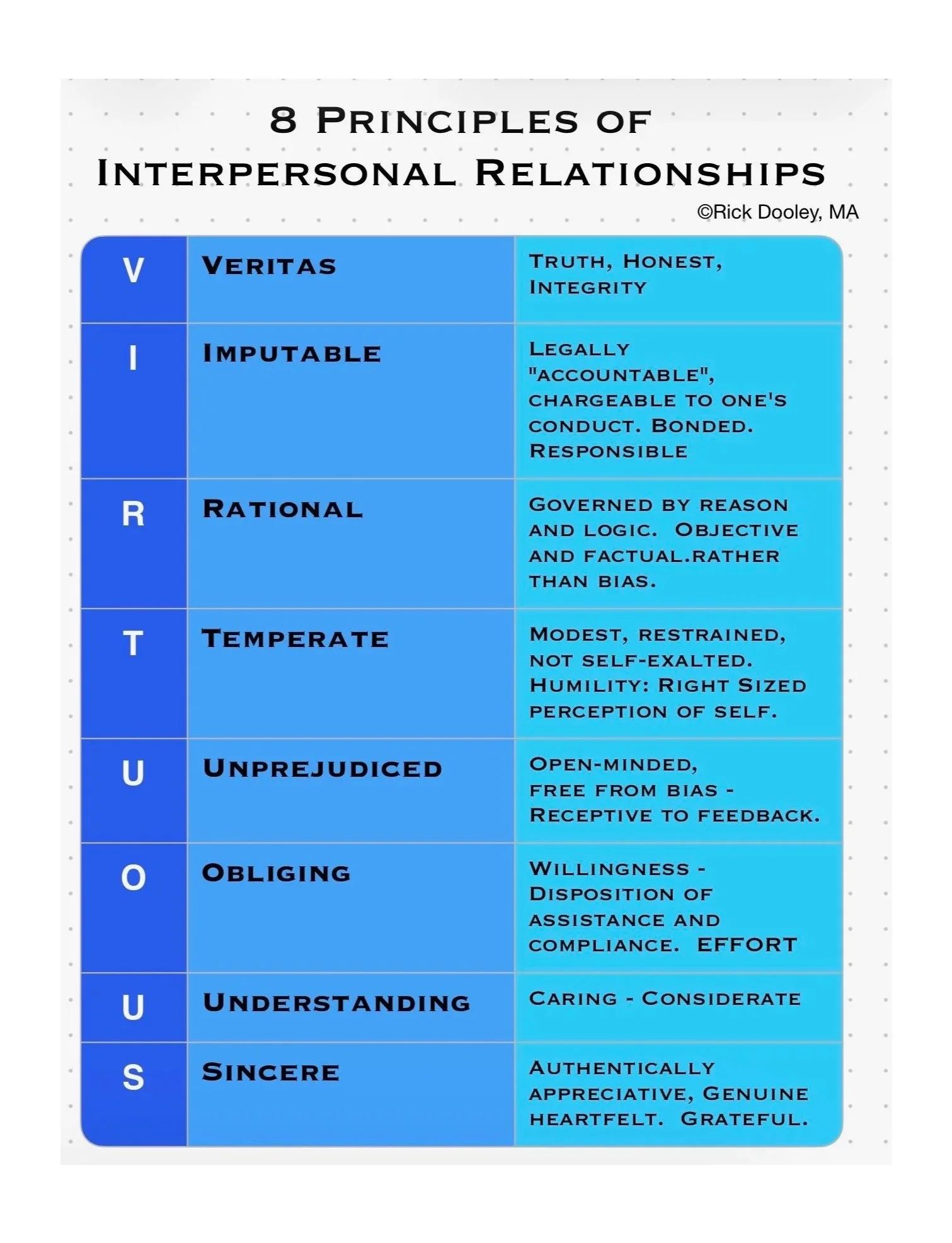
8 Principles of Healthy Relationships: #7 Understanding
Why Are More People Choosing Therapy Over the Church?
The Seventh Principle of Healthy Relationships: Understanding
One of the most uncomfortable questions the church should be willing to ask is this:
Why are so many people looking to therapists before they look to fellow believers?
This isn't an argument against counseling or therapy. Biblical counseling has an important place, and there are circumstances where professional counseling is wise and necessary. The better question is this:
Has the church neglected something that Scripture expects every believer to practice?
I believe the answer is yes.
One of the greatest needs in the church today isn't simply better theology—though we desperately need sound doctrine. It isn't simply better preaching or stronger church government. What is often missing is something profoundly practical:
Understanding.
Understanding is the seventh principle in our framework for healthy relationships. It is the principle that produces the action of caring.
Healthy Churches Are Built on Healthy Relationships
Throughout this series we've argued that healthy relationships are not built on isolated virtues but on a collection of interconnected principles that form the acronym VIRTUOUS.
Veritas – Tell the truth.
Imputable – Take responsibility.
Rational – Think objectively.
Temperate – Walk in humility.
Unprejudiced – Examine your assumptions.
Obliging – Be willing to do what is right.
Understanding – Care through genuine consideration.
Sincere – Live with authentic gratitude.
These are not options at a buffet.
You cannot choose truth without responsibility. You cannot care well without humility. Every principle strengthens the others.
Understanding is where many of them begin to come alive.
Caring Begins Before Advice
One of the biggest mistakes Christians make is assuming that helping someone means immediately correcting them.
Often, someone shares a struggle only to hear:
"You just need to pray more."
"You need to trust God."
"You should go get help."
Those statements may eventually be true.
But they often arrive before understanding.
Scripture says,
"The purpose in a man's heart is like deep water, but a man of understanding will draw it out." (Proverbs 20:5)
Notice what wisdom does.
It doesn't immediately answer.
It draws out.
Understanding listens before it speaks.
It seeks to know before trying to be known.
Why Therapy Feels More Attractive
One reason therapy has become so appealing is surprisingly simple.
People feel heard.
Whether the therapist ultimately gives good advice or not, the client often experiences something they rarely find elsewhere:
Someone listened.
Someone asked questions.
Someone cared enough to understand.
The tragedy is that this should characterize the church.
Christians should be the best listeners in the world because we know the Savior who continually listens to us.
We should be the safest people to confess struggles to because we understand grace.
Instead, too often believers fear they'll receive quick answers, correction without compassion, or Bible verses delivered without first hearing their story.
The issue isn't whether Scripture is sufficient.
The issue is whether we are applying Scripture with the heart of Christ.
Caring Is Not Enabling
Understanding does not mean agreeing.
It does not mean affirming everything someone feels.
Real care always seeks what is best—not merely what is most comfortable.
Imagine someone newly diagnosed with diabetes.
Real care isn't buying them another box of donuts because you don't want them upset.
Real care may involve difficult conversations, healthier habits, and uncomfortable changes because you love them too much to encourage what destroys them.
That's the difference between caring and enabling.
One seeks comfort.
The other seeks flourishing.
As Jordan Peterson has said, love wants "the best for the best part of another person."
That idea harmonizes beautifully with biblical love.
Love seeks holiness, not merely happiness.
Self-Care Is Not Self-Indulgence
Our culture often defines self-care as making yourself comfortable.
Scripture paints a very different picture.
Real self-care means making choices that honor God and ultimately benefit those around you.
A father who chooses healthier habits is caring for his family.
A husband who confronts sinful habits is caring for his marriage.
A believer who disciplines himself spiritually is loving the people who depend upon him.
Sometimes the most loving thing you can do for others is to refuse to indulge yourself.
Sometimes We Care More About Principles Than People
Christians who love truth can unintentionally fall into another danger.
We begin protecting biblical principles while forgetting the people those principles are meant to serve.
Years ago, someone called another believer asking for advice about a struggling church member.
Rather than helping the caller think biblically, he immediately shut down the conversation:
"This is gossip. I don't want to hear it."
Now certainly gossip is sinful.
But this wasn't gossip.
This was someone asking for wisdom.
In trying to defend the principle, he failed to care for the person.
Jesus never ignored truth.
Neither did He ignore people.
Neither should we.
Understanding Requires Empathy
Empathy isn't agreement.
Empathy is the willingness to step into someone else's perspective long enough to understand how they arrived where they are.
It asks questions like:
What are they afraid of?
What wounds have shaped them?
Why does this matter so deeply to them?
Only then are we prepared to offer biblical wisdom that actually addresses the heart.
Sympathy simply feels sorry for someone.
Empathy seeks to understand them.
Understanding creates a bridge over which truth can travel.
Do People Know You Care?
One lesson every counselor eventually learns is this:
People don't care how much you know until they know how much you care.
You may recognize someone's problem within five minutes.
That doesn't mean they're ready to hear your solution.
Advice that arrives before trust often feels like judgment.
But when someone knows they are loved, correction becomes much easier to receive.
Barriers to Understanding
Many of us struggle to care well, not because we don't love people, but because something gets in the way.
Sometimes it's fear of vulnerability.
Sometimes it's emotional exhaustion.
Sometimes we've been hurt so many times that we've become guarded.
Other times we simply default to logic without compassion.
On the opposite side, some people become so emotionally driven that they lose objective judgment.
Healthy understanding holds both together.
Truth without compassion becomes harsh.
Compassion without truth becomes enabling.
Biblical love requires both.
Am I Caring—or Just Wanting to Be Liked?
Parents understand this tension.
There comes a moment when you must choose:
Do I want my child to like me today?
Or do I want what is best for them tomorrow?
The same question applies in every relationship.
Sometimes we avoid hard conversations because we want acceptance more than we want someone's growth.
That isn't love.
That's self-protection.
Real care is willing to risk temporary discomfort for someone else's long-term good.
Becoming a Church That Cares
Imagine churches known not merely for correct doctrine but for compassionate understanding.
Imagine small groups where people could confess struggles without fear of immediate condemnation.
Imagine believers who listened deeply, asked wise questions, and then faithfully pointed one another toward Christ.
This is entirely possible.
The church doesn't need to imitate secular therapy.
It needs to become more like Jesus.
Jesus listened.
Jesus asked questions.
Jesus understood people better than they understood themselves.
And then He lovingly spoke truth that transformed lives.
The church should be the safest place in the world to be honest—not because sin is minimized, but because grace is magnified.
When believers become people of understanding, caring naturally follows.
And caring relationships become one of the clearest demonstrations of the gospel to a hurting world.